Bijlmermuseum and Holendrecht are two neighbourhoods in Amsterdam Zuidoost. The municipal classification distinguishes different residential settings; one roofing approach cannot represent all of them. Within the municipality of Amsterdam, the enquiry therefore needs to identify building height, access and the maintenance unit involved.
How should access to the relevant roof be described?
State the building height and whether a fixed access route, roof hatch or route through a dwelling is known. Share what you know; do not enter unfamiliar hatches or technical spaces merely to complete an enquiry. A manager may have existing access arrangements or building drawings.
Distinguish access for an initial inspection from material handling during execution. A staircase may be available for a visit without resolving the transport question. Preparation should establish the actual route to be used and who can release it at the agreed time, especially where locked communal spaces are involved.
Which reports concern the same building section?
Where several homes are involved, a location-by-location record is more useful than one general statement that the roof leaks. For each mark, record the floor, side and date. Explain whether it affects a dwelling, shared room or lower roof section. Repeated reports should retain their individual timelines.
A pattern can guide investigation but does not establish a shared cause. Ask which surfaces will be examined and which were inaccessible. In a larger complex, a penetration defect may be unrelated to an edge report. Clear identification prevents different questions from being unintentionally merged into one repair commission.
How should installations and roof edges enter the scope?
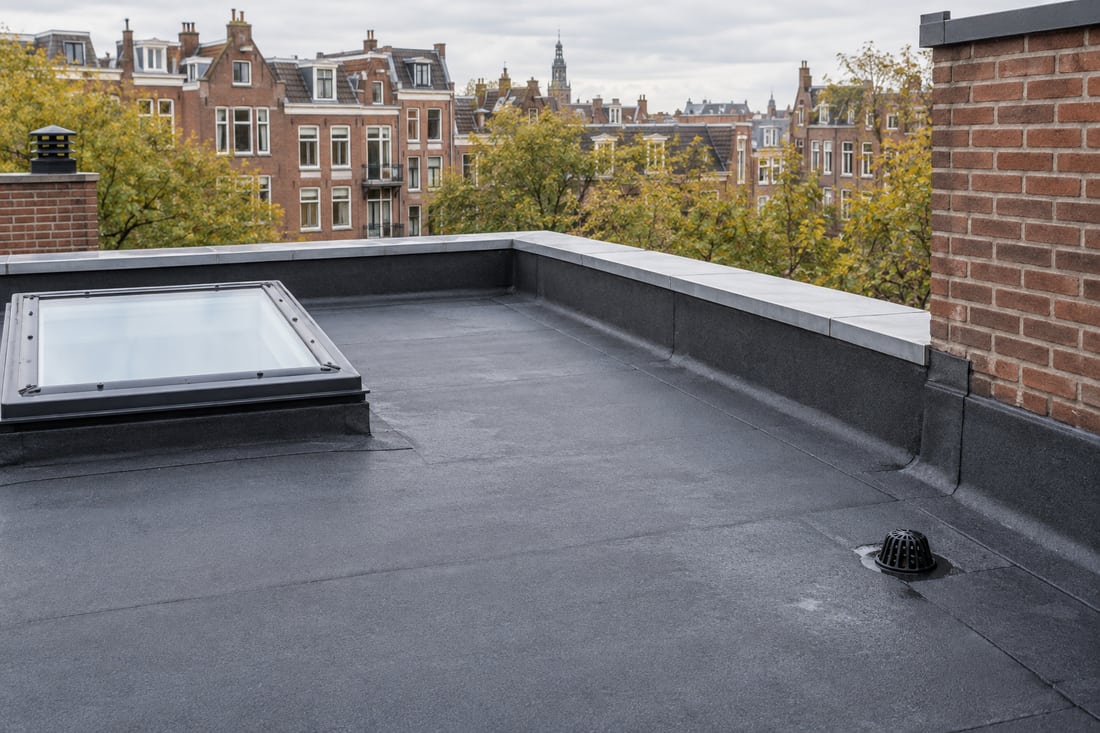
A flat roof may combine open surfaces with technical equipment zones. Identify which penetrations, upstands and edges are included in investigation. A quotation for a new membrane without these components does not explain how the junctions will function after renewal.
Ask which installations remain and who coordinates any other contractors needed. Maintenance access should remain identifiable after the work. If a section cannot be inspected, that limitation belongs in the findings. Compare local repair with wider renewal only after these questions are addressed; the building’s height alone does not determine the necessary scope or justify replacement of all roof sections.
What makes a workable schedule for residents?
Discuss the rooms and entrances needed during inspection or execution. A Holendrecht resident may have a different access arrangement from an apartment in a larger Bijlmermuseum complex. The neighbourhood identifies the location but cannot replace building-specific information.
Agree on the contact person and how changes will be communicated. Mention ongoing work that may affect the route and have current access checked before the execution date. The roof planner collects type, dimensions and the question without promising a price or visit time. An enquiry supports preparation but does not authorise the start of construction or establish that all access arrangements are settled.
Frequently asked questions
Is an enquiry in Bijlmermuseum always a high-rise commission?
No. Identify the actual building and height. The neighbourhood name is insufficient to establish access or method.
Can a tenant in Holendrecht report a damp patch?
You can describe the observation. Coordinate authority for investigation and execution with the owner or manager.
Are technical installations automatically included in roof renewal?
No. Identify the relevant components and responsibilities. Relocation or alteration may require a separate commission.
- Gemeente Amsterdam: stadsdeel Zuidoost
- Onderzoek en Statistiek Amsterdam: wijken en buurten
- Gemeente Amsterdam: stadsdelen en stadsgebied
Consulted 19 September 2026. Check requirements for your own address and selected system.