Understand your roof before deciding.
24 roofing guides covering assessment, materials, tiled roofs, insulation and delivery. Find practical answers for your next decision.
Discuss your roof ↗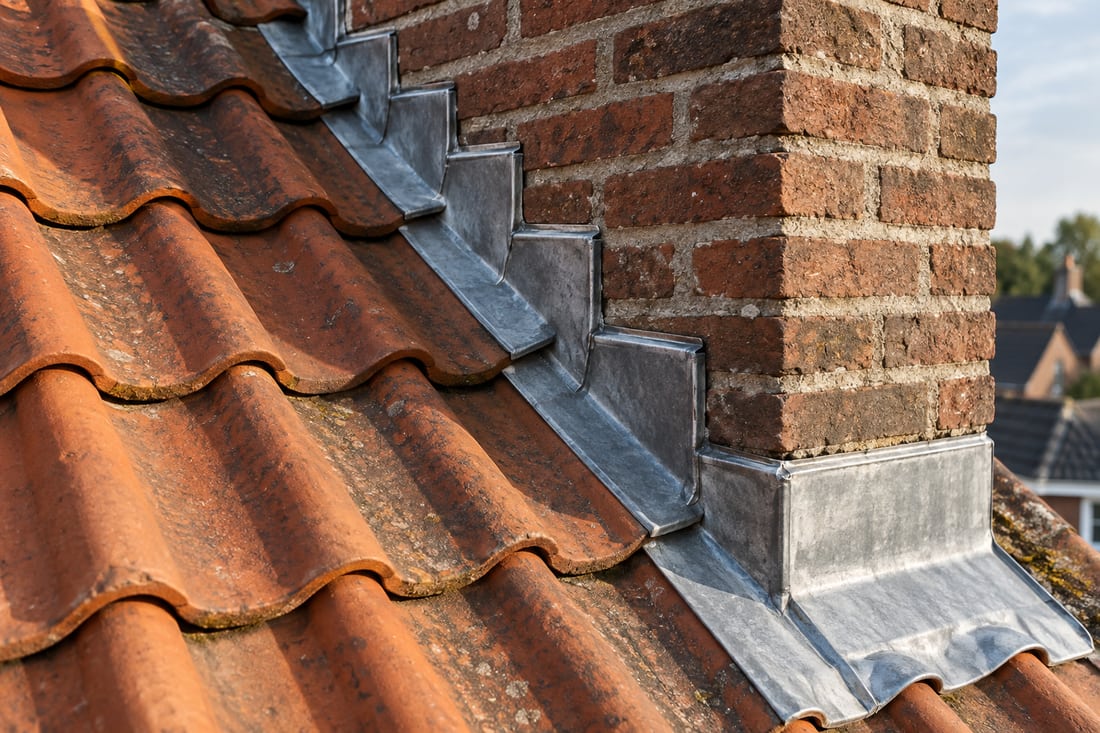
24 guides
Assessment & repair
6 guidesHow do you document a roof leak?
Record where moisture appears, when it changes and which roof components are above it. A useful report combines overview photographs, conditions and access…
Read the explanation ↗Roof leak or condensation: how do they differ?
A rain leak admits water from outside; condensation forms when water vapour cools on or within the construction. Their symptoms can resemble each other and…
Read the explanation ↗How can you safely record roof damage after a storm?
Keep away from loose roof components after storm damage and record observations from a safe position. Distinguish immediate danger, temporary protection and…
Read the explanation ↗Repair or renew a roof: what should determine the choice?
A local repair can suit a defined defect where the surrounding construction remains serviceable. Renewal becomes relevant with wider deterioration,…
Read the explanation ↗Preparing a roof inspection: what information helps?
A roof inspection becomes more useful with a defined question, known roof history and agreed access. Establish which components will be examined and how…
Read the explanation ↗How do you plan roof maintenance around actual condition?
Useful roof maintenance starts with a record of components, known defects and safely arranged inspections. Plan work around condition and use. A fixed…
Read the explanation ↗Materials & junctions
6 guidesHow do you compare complete EPDM and bitumen roof systems?
EPDM and bitumen can both form part of a waterproof flat roof. Compare the proposed build-up, preparation and junctions before choosing a material. Neither…
Read the explanation ↗Overlaying a roof: what must be checked first?
Overlaying adds a new roofing system above existing layers. It should only be considered after assessing condition, moisture, adhesion, loading and…
Read the explanation ↗Standing water on a flat roof: what should be assessed?
Persistent water on a flat roof is a reason to assess falls, outlets and roof condition. The size of a puddle in one photograph does not provide a full…
Read the explanation ↗Why do roof edges and upstands shape the scope?
A roof edge works together with the substrate, waterproof layer and adjoining wall. The visible trim is not the complete detail. Renovation needs particular…
Read the explanation ↗Why look beyond flashing when a chimney junction leaks?
Moisture near a chimney can relate to roof flashing, masonry or other components. Replacing the visible flashing is therefore not automatically the right…
Read the explanation ↗Rooflights during roof renovation: retain or include them?
A serviceable rooflight may sometimes remain, but its upstand and junction must suit the new roof build-up. Assess the glazing unit, attachment and…
Read the explanation ↗Tiled roofs
4 guidesCan existing roof tiles be reused?
Existing tiles may be considered for reuse when their condition, dimensions and available replacements suit the renovation. Work beneath the covering does…
Read the explanation ↗When should battens and underlay be assessed?
Battens, counter-battens and underlay deserve assessment when a tiled roof is opened or symptoms suggest problems below the tiles. They perform different…
Read the explanation ↗When should ridge tiles and their fixings be assessed?
Loose, missing or damaged ridge tiles call for assessment of the complete junction at the top of the roof. The visible ridge tile is only one component.…
Read the explanation ↗How does a roof valley differ from an eaves gutter?
A valley channel carries water along the internal meeting of roof slopes; an eaves gutter normally collects water along a lower roof edge. Their locations…
Read the explanation ↗Insulation & future plans
4 guidesHow should insulation be considered during flat-roof renewal?
Consider insulation together with the complete roof build-up, moisture behaviour and junctions. Adding insulation beneath a flat roof is not an automatic…
Read the explanation ↗What insulation questions belong in a tiled-roof renovation?
Start with attic use and the existing roof layers. Insulating the roof slopes and insulating the floor of an unheated, closable attic are different choices.…
Read the explanation ↗What should be checked before installing solar panels?
Assess roof condition, the proposed mounting arrangement and implications for loading and maintenance before installing solar panels. Good sunlight does not…
Read the explanation ↗Can a green roof be added to an existing flat roof?
A green roof requires assessment of load capacity, waterproofing, root protection, drainage and maintenance access. Having a flat surface is not sufficient.…
Read the explanation ↗Decisions & delivery
4 guidesHow do you compare roofing quotations with different scopes?
First compare roof areas, layer build-up, junctions, access and arrangements for uncertainties. Only when those components align do total prices describe…
Read the explanation ↗How can an owners’ association prepare roof work?
An owners’ association can prepare roofing by consolidating reports, checking decision-making authority and defining a shared technical scope. Separate…
Read the explanation ↗What should be checked for roofing on an Amsterdam listed building?
Check the property’s status and the nature of the proposed work first. Like-for-like maintenance and changes to materials, form or detailing are different…
Read the explanation ↗How do you plan roof work at a difficult-to-access Amsterdam property?
Map access, material transport, protection and resident coordination before comparing quotations. A rear roof or upper-floor apartment may require a…
Read the explanation ↗From a roof question
to a clear plan.
A good plan starts at the top.
Schematic view. Actual roof construction requires an on-site assessment.