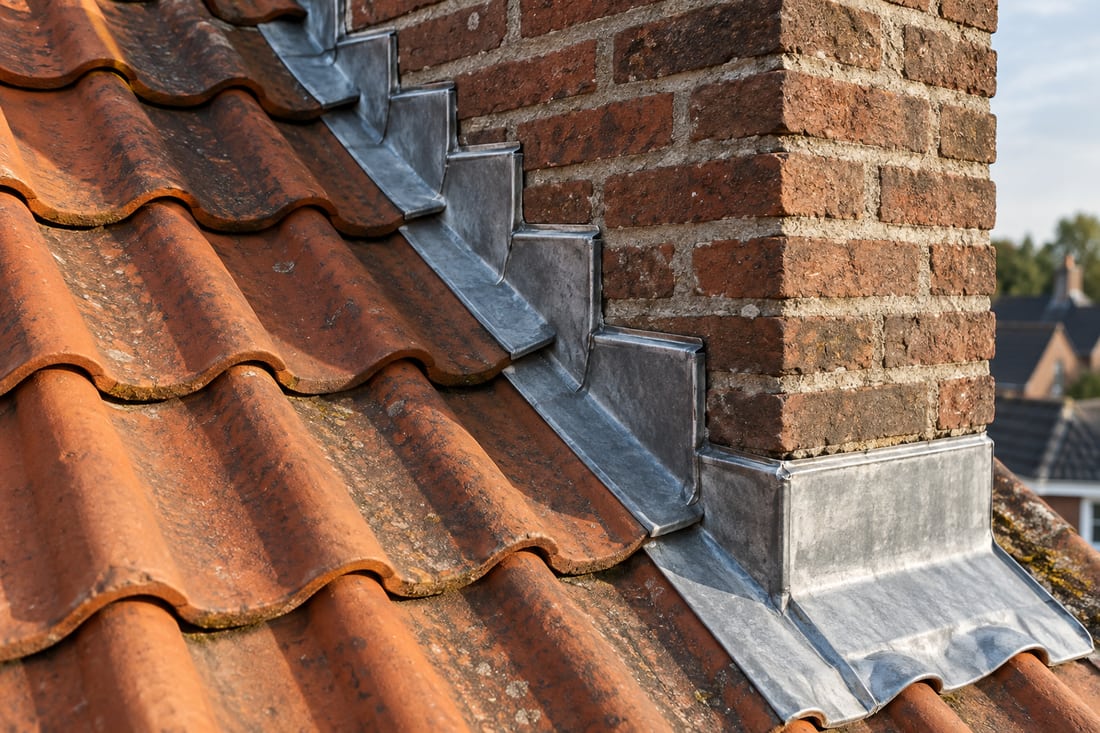
A local repair can suit a defined defect where the surrounding construction remains serviceable. Renewal becomes relevant with wider deterioration, recurring problems or necessary changes to the build-up. Age alone does not determine the appropriate choice.
How does defect distribution affect the choice?
One damaged junction creates a different starting point from several deteriorated zones across the roof. Ask for a record of visible defects, how they relate and which areas appear serviceable. A previously repaired location becoming damp again calls for investigation of the cause rather than automatically enlarging the patch.
Consider how the space below is used as well. An occupied upper floor may need different planning and protection from a detached storage building. Describe both the roof condition and the effects of the current problem, so the comparison addresses the building’s practical needs rather than its age alone.
How do you compare equivalent scopes?
A repair and a renovation will naturally have different prices, but their differences in scope need explaining first. Does the proposal address only the outer covering, or also the deck, drainage and junctions? Is existing insulation retained? Which uncertainties can only be resolved once work starts?
Set out included and excluded components side by side. This shows whether limited work actually addresses the established defect. Renovation is not automatically preferable because it involves more work, and a repair is not necessarily economical if the same unresolved cause repeatedly returns. Ask for the reasoning behind each option rather than a simple label.
Which future plans influence the decision?
When a covering is being renewed, insulation, rooflights or preparation for solar panels can enter the same discussion. This does not mean everything must happen simultaneously. Looking ahead can, however, avoid removing recently installed components shortly afterwards. Separate confirmed plans from possibilities, and ask which interventions are technically linked and which can proceed independently.
A tiled roof may retain serviceable tiles while work is undertaken below them. A flat-roof overlay requires its own assessment of the existing build-up. Neither example supports a universal rule; the useful question is which combination makes sense for this particular construction and sequence of work.
How can you assess a recommendation?
A useful recommendation explains why the approach fits the observed condition and identifies its limitations. Ask what may still need attention after a local repair, or what a complete renewal would specifically add. Avoid deciding solely from a general lifespan quoted in a brochure.
Keep the findings and the agreed repair boundaries so later inspections can refer back to them. Within an owners’ association, an explained comparison helps residents discuss the same decision instead of different assumptions. Condition, construction, access and intended use should drive the recommendation rather than an automatic replacement date unsupported by inspection.
Frequently asked questions
Does an old roof always need replacement?
No. Age helps explain its history, but condition, materials, previous work and junctions determine what intervention is appropriate for the actual roof.
Can only part of a roof be renewed?
It may be worth investigating. The junction between existing and new materials and the remaining condition of other areas must then be assessed explicitly.
What if quotations recommend different approaches?
Ask which findings support each recommendation. Compare the components examined, the proposed scope and the remaining uncertainties before comparing the total prices.