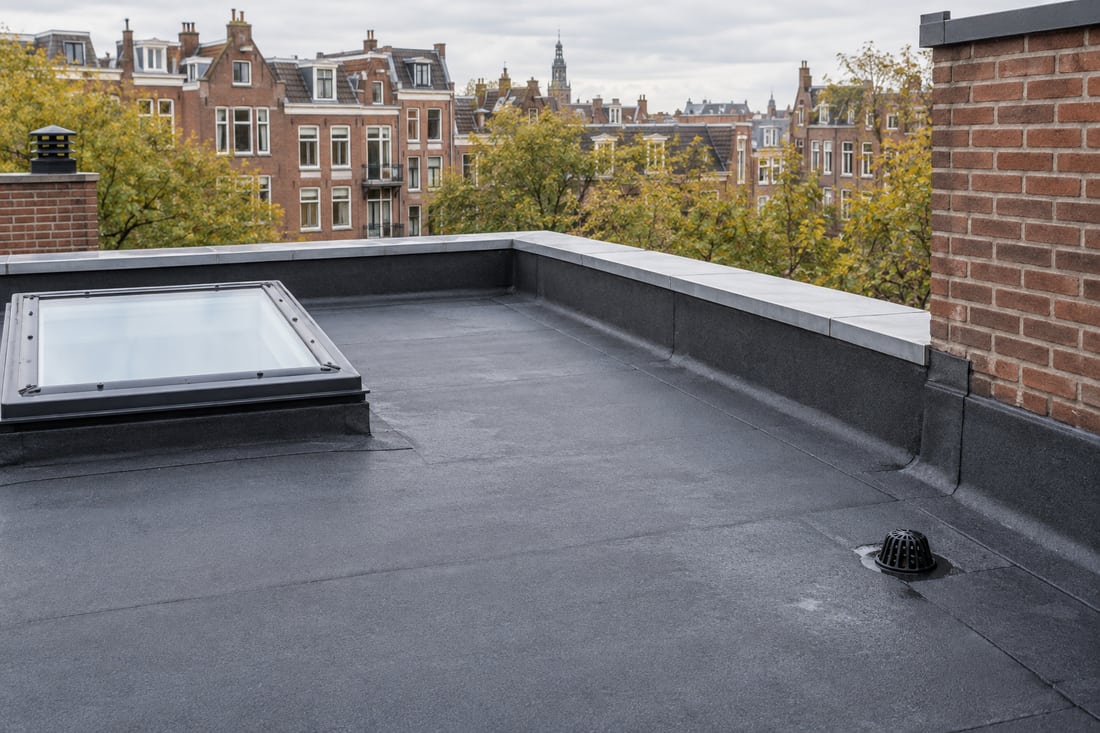
A roof overlay adds a new covering layer above an existing layer that remains wholly or partly in place. Retention requires assessment of the existing condition.
What does this mean on your roof?
Overlaying differs from complete removal but is not an automatic remedy for every leak. Moisture, adhesion, substrate condition and previous repairs influence whether retention is appropriate.
Additional thickness can also alter the relationship between the surface, outlets and upstands even when the roof area itself does not change.
A proposal should identify retained layers and explain the reason for keeping them. Ask how concealed defects discovered during work will be handled and which sections need opening for assessment. Record connections at edges, penetrations and neighbouring roof surfaces. Describing only a new membrane area leaves the conditions for a suitable overlay unclear, particularly where existing construction has not been confirmed.
Frequently asked questions
Is overlaying always less work?
Not necessarily. Preparation and adjustment of junctions can be substantial.
Can a wet existing layer simply remain?
That needs investigation. A new outer layer does not automatically make trapped moisture harmless.
Consulted 19 September 2026. Check requirements for your own address and selected system.