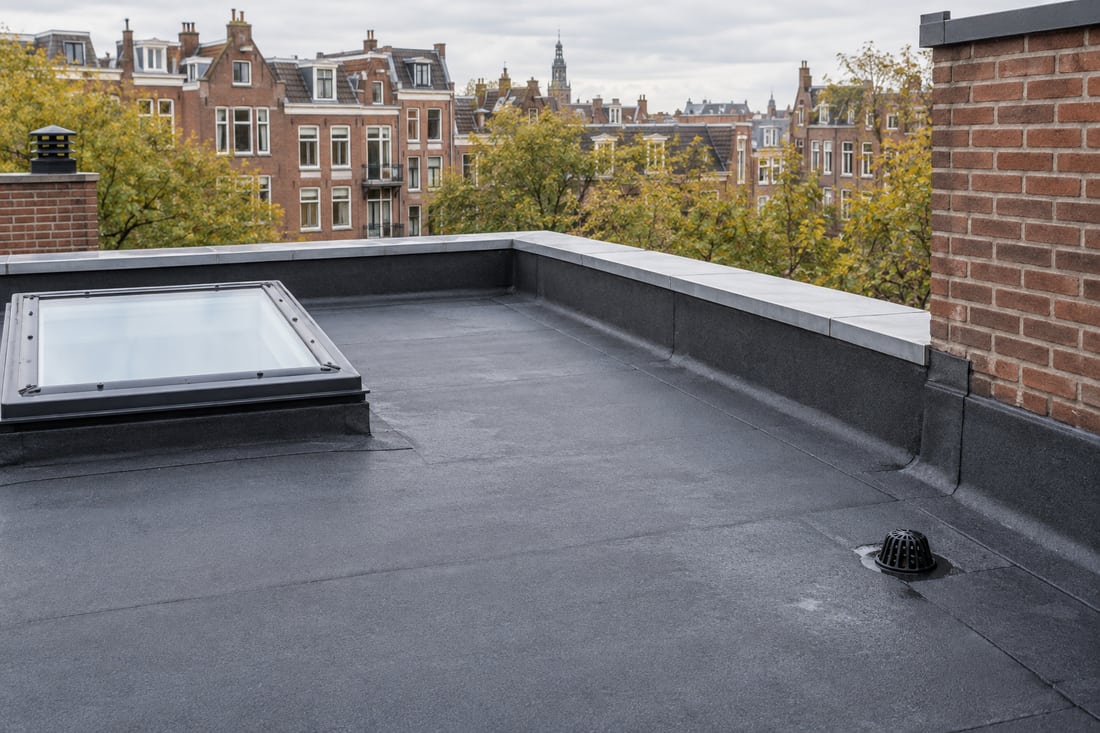
Overlaying adds a new roofing system above existing layers. It should only be considered after assessing condition, moisture, adhesion, loading and junctions. An additional layer does not resolve every deteriorated or leaking substrate.
How do you decide which layers can remain?
Ask which existing layers are present and how their condition was established. A description such as “retain existing felt” does not explain whether insulation, substrate and previous repairs have been assessed. Moisture or a poorly bonded layer will not disappear simply because another covering is added.
The roof’s history can provide clues but does not replace investigation. Different roof sections may require different conclusions. Record the package being retained and the limitations of the assessment, so the quotation is not built on an unstated assumption that every concealed part of the existing construction is sound.
What height is available at junctions?
Adding layers changes the roof build-up height. This can affect upstands around rooflights, thresholds and wall junctions. Space that appears generous in a photograph must be assessed as part of the complete detail. Ask which edges will be altered and which components remain unchanged.
Outlet positions belong in the same review. An inexpensive overlay that subsequently requires extensive unpriced junction work may not have been a comparable offer. The proposal should explain in advance how the new surface connects to the existing surroundings, including transitions to neighbouring roof areas that are not being renewed.
How should drainage and attachment be assessed?
Overlaying does not automatically improve roof falls or drainage capacity. A roof holding water in unsuitable locations therefore requires more than a material selection. The proposed attachment method must also suit the existing substrate. Ask whether the contractor proposes bonding, mechanical fastening or another arrangement and why that approach is appropriate.
This is not a design decision for an online area calculator. Loading, product instructions and the actual construction help determine suitability. The responsible professional should establish the technical assumptions, rather than leaving the owner to choose a fastening method from a list of apparently interchangeable options.
How do you compare retention and removal?
Set out the preparation, waste handling, repairs and new junctions included in both options. Discuss what will become harder to inspect if existing layers remain concealed. Complete removal may provide more information, but it also changes the working situation and exposure to weather. The choice should consequently rest on findings and a defined scope.
Ask what happens if an unexpected condition is discovered during the work. An agreed decision point prevents an overlay project from quietly turning into a different commission without an explanation, revised scope or separately agreed costs. Retain the final description in the roof’s maintenance file.
Frequently asked questions
Does overlaying solve moisture in existing layers?
Not automatically. Existing moisture and its cause need assessment before retaining those layers can be recommended as a suitable approach.
Is overlaying the same as a local repair?
No. It introduces a new covering arrangement over an area. A local repair addresses a defined defect and has a different scope.
Can the existing roof edge remain unchanged?
That must be established for the actual detail. Additional height may change the junction even where the existing edge material remains serviceable.
Consulted 19 September 2026. Check requirements for your own address and selected system.