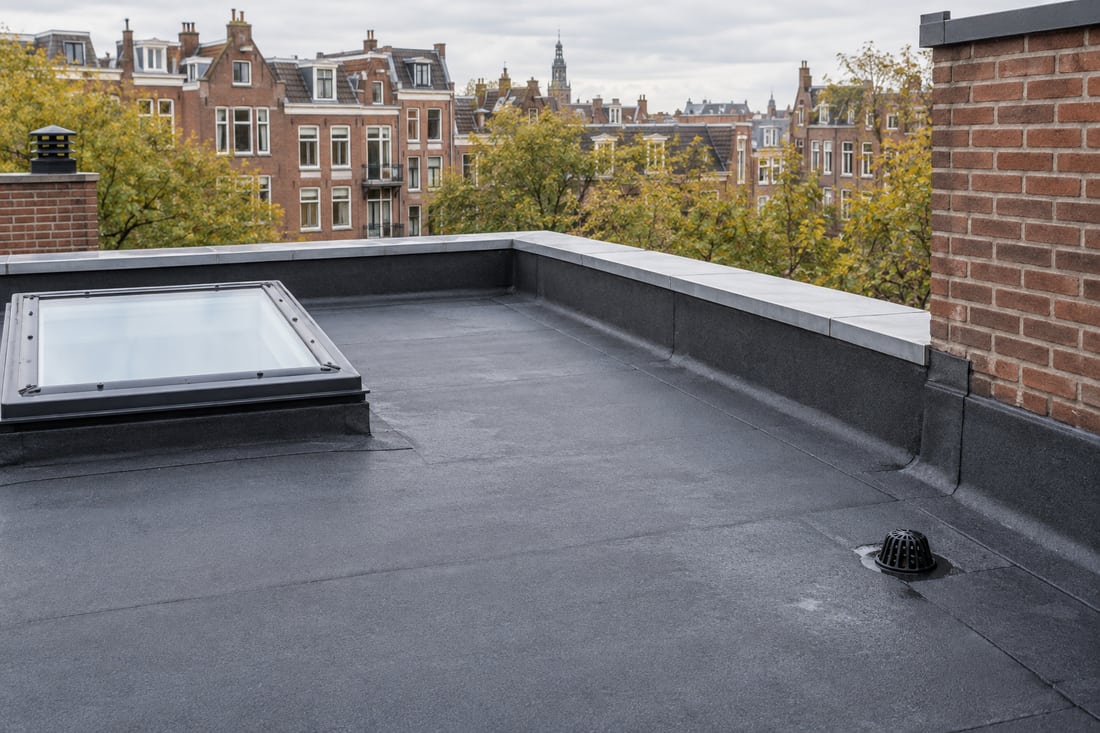
A serviceable rooflight may sometimes remain, but its upstand and junction must suit the new roof build-up. Assess the glazing unit, attachment and waterproof interface together. Replacing only the transparent top does not necessarily address a leaking junction.
Which component needs assessment?
The word rooflight may refer to the transparent dome, the frame-like component beneath it or the whole assembly including its upstand. Establish which part is damaged or causing concern. Water along the internal lining, discoloured glazing and an opening mechanism that no longer works are different issues.
Overview photographs and a description of how the unit is used help define the scope. Do not stand on the rooflight or treat it as a walking surface. Access and protection during assessment need to be considered by the relevant professional, rather than assumed from the appearance of the transparent panel.
How does the rooflight connect with new layers?
Additional insulation or replacement covering can alter the height available around an existing rooflight. Ask whether the current upstand suits the proposed build-up and which adaptations may be required. Connections to internal finishes also deserve attention when components are changed.
A proposal may cover exterior work while excluding internal making-good; that distinction should be clear beforehand. Explain whether the room below is finished and occupied or currently being renovated. This affects preparation and helps prevent the roofing and interior work from depending on each other without an agreed sequence, responsible party or clearly defined handover point.
When does combining work make sense?
Roof renewal is an opportunity to assess a rooflight, not an automatic reason to discard a serviceable unit. Compare retention and replacement using condition, required function and junction needs. A possible future enlargement should be investigated as a separate proposal. Changing the opening may affect the structure and address-specific requirements.
The roof planner on this website does not calculate those implications. Record your preferences, then establish technical feasibility and any permissions before ordering components. This avoids selecting a larger or different unit on appearance alone and later discovering that the surrounding construction or agreed renovation scope cannot accommodate it.
What should be checked at completion?
The proposal should identify retained rooflight components, replacement parts and the finished connection to the roof. Discuss product information, operation and any maintenance considerations. For an opening unit, establish which functions will be checked after the work.
Retain photographs of junction details before they become concealed where such images are available. A later concern can then be compared with the agreed scope instead of an ambiguous note saying only that the rooflight was treated. This is especially useful when roof covering, glazing and interior finishes are handled by different parties whose responsibilities need to remain clear.
Frequently asked questions
Must every rooflight be replaced with a new roof?
No. Condition and compatibility with the proposed roof build-up determine whether retention is appropriate. Include the upstand and any opening mechanism in the assessment.
Does a leak always mean the dome is damaged?
Not necessarily. Water may enter at the junction, upstand or neighbouring roof detail. Establish which component is involved before selecting a replacement.
Can a larger rooflight be included straight away?
Include the preference in preparation, but have the opening, structure and applicable requirements assessed separately. Choosing a product alone does not establish feasibility.