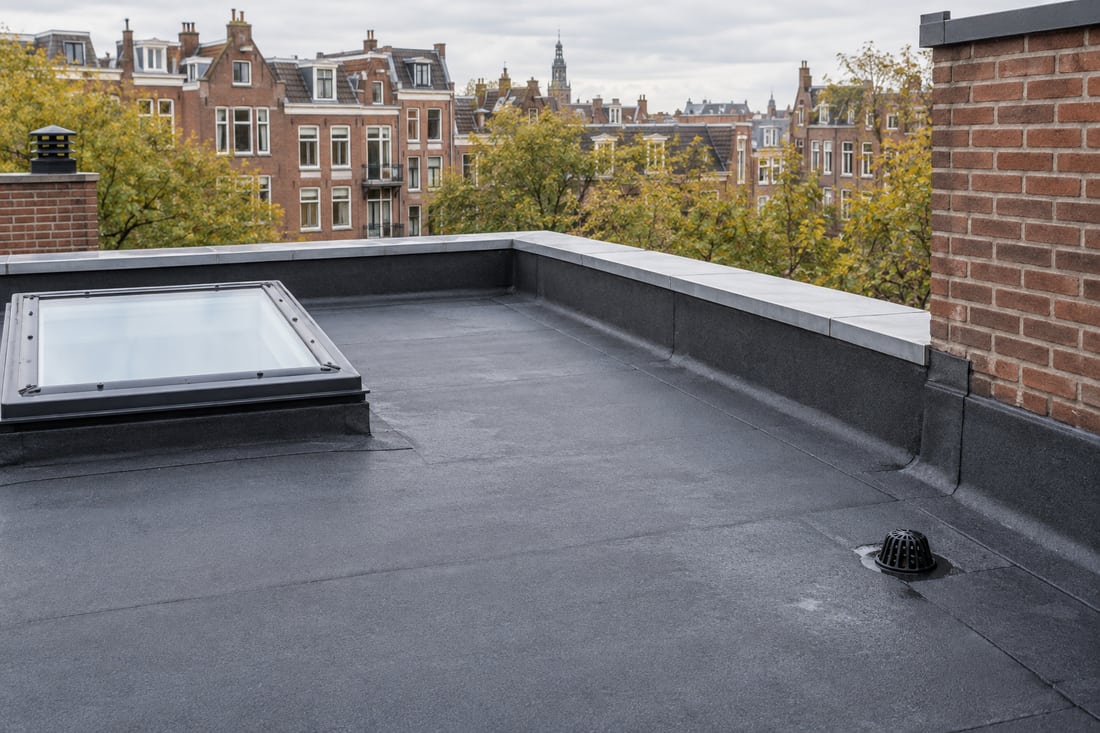
A roof junction angle, called a kim in Dutch, is the transition between a roof surface and an upstanding construction component, where connected layers change direction.
What does this mean on your roof?
This angle occurs beside walls and upstands. Its shape and substrate influence how the waterproof covering is connected.
A defect at the angle is not necessarily the same as damage in the middle of the roof surface. An enquiry should therefore identify the affected side and adjoining components rather than describing only a generic membrane problem.
During renewal, additional insulation or covering layers may change the angle arrangement. Ask how it will be detailed and which existing materials remain. A quotation describing only the open surface does not answer that question. The appropriate solution follows the selected system and actual construction rather than one universal detail for every roof.
Frequently asked questions
Is the kim a separate material?
No. It describes a transition or angle where different materials meet.
Why does this angle matter when insulating?
A changed build-up height can alter the junction and available space.