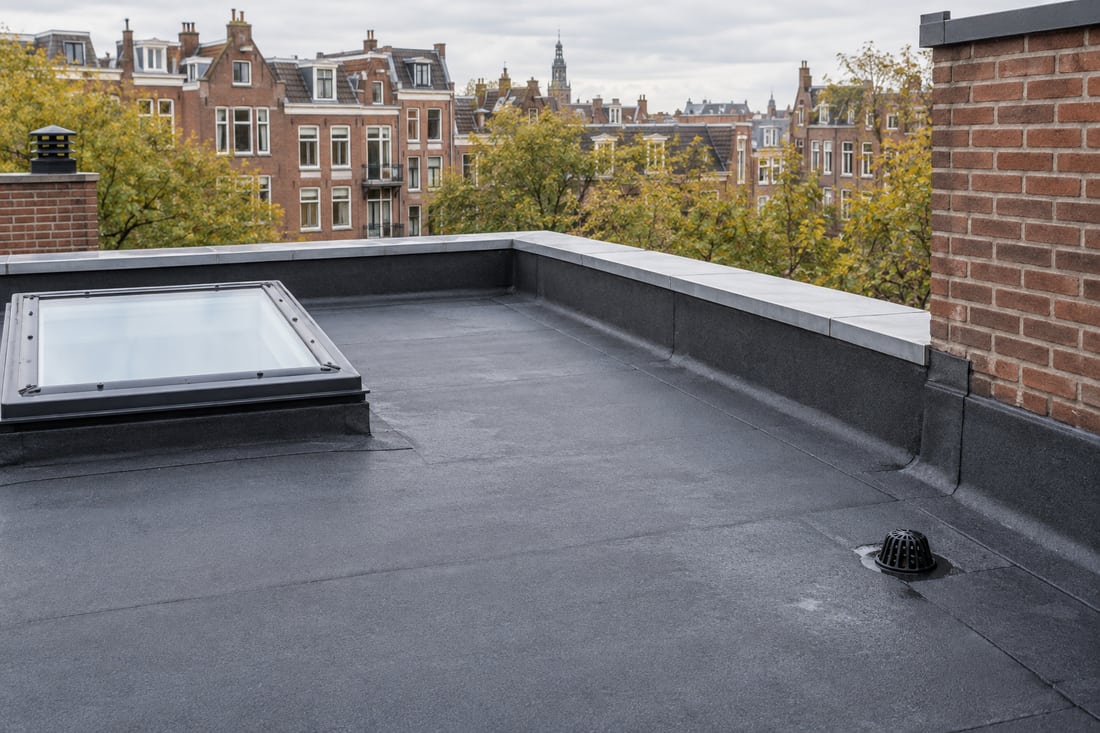
Lead flashing is shaped lead used in a weather-resistant junction, for example where a roof meets a chimney or wall. It forms part of a larger detail.
What does this mean on your roof?
Visible flashing over the covering does not reveal its connection within masonry or behind neighbouring components. Moisture near a chimney therefore calls for assessment of surrounding junctions too.
A split or displaced piece is an observation, not automatically the complete diagnosis or proof that every other potential water route is sound.
A proposal should identify the side being treated and whether it covers only flashing or adjacent components as well. Ask how replacement sections meet retained materials. Alternative flashing products need the same clarity about system and application. Keep photographs identifying the repaired location so later reports are not confused with another side of the same chimney.
Frequently asked questions
Does split flashing prove the only leak cause?
No. It may contribute, while masonry and other junctions can also matter.
Is visible flashing the same as cavity flashing?
No. Cavity flashing has a different position and function associated with the wall cavity.